
San Marino Travel Guide: Europe’s Hilltop Republic
Perched atop Mount Titano in the heart of Italy’s Emilia-Romagna region, San Marino is one of Europe’s most enchanting and genuinely underappreciated destinations. Despite its tiny size — one of the smallest countries in the world, at roughly 61 square kilometres — this hilltop republic offers a striking blend of medieval history, panoramic landscapes, and genuine cultural depth. This guide covers San Marino’s top destinations, standout experiences, and the practical details worth knowing before you visit.
Why San Marino Deserves Your Attention
Often overshadowed by its much larger neighbour, San Marino’s real appeal lies in pairing a genuinely compact scale with a real wealth of things to see and do. For travellers increasingly drawn to more intimate destinations over Europe’s overtouristed hotspots, San Marino ticks the boxes:
- Genuinely sustainable tourism: With visitor numbers naturally limited by the country’s size, San Marino offers a real antidote to overtourism without having to try particularly hard.
- Real cultural immersion: Medieval history and local tradition are woven into daily life here, not staged for visitors.
- Accessible quality: Boutique hotels and strong local dining are available without the inflated pricing found in more heavily touristed parts of Italy just across the border.
- Genuinely walkable: With fewer crowds and most major sights within walking distance in the historic centre, visitors can explore without the fatigue of a bigger city itinerary.
Top Destinations in San Marino
1. The Historic Centre and Mount Titano
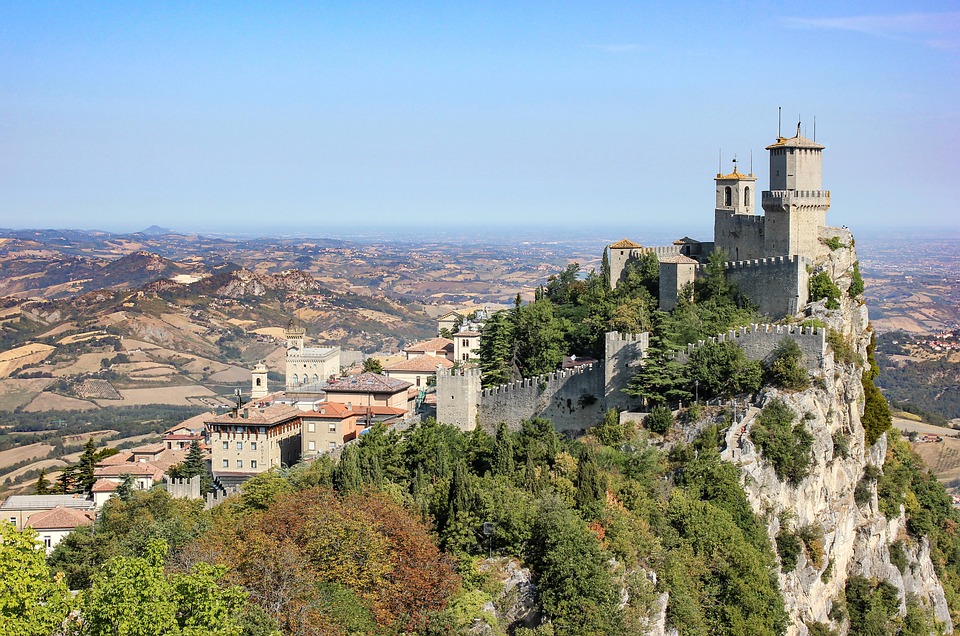
San Marino’s UNESCO World Heritage-listed historic centre is a genuine maze of cobblestone streets, fortified towers, and sweeping views from Mount Titano out across the surrounding Italian countryside.
- Guaita Tower: The oldest of San Marino’s three towers, dating to the 11th century, offering genuinely spectacular panoramic views and the country’s most recognisable landmark.
- Cesta Tower: Home to the State Museum of Ancient Weapons, housing a genuinely substantial collection of arms and armour spanning several centuries.
- Basilica di San Marino: A striking neoclassical church at the spiritual heart of the republic, built over the site of the country’s original 4th-century church.
2. Borgo Maggiore: A Gateway to Everyday San Marino
For a more authentic glimpse of daily Sammarinese life away from the main tourist circuit, Borgo Maggiore offers a genuine weekly market and local restaurants. A cable car connects it directly to the historic centre above, making it an easy, worthwhile addition to any visit rather than a detour.
3. San Marino Adventure Park
A genuinely refreshing break from historic sightseeing, this adventure park offers zip-lining, rope courses, and climbing walls set within woodland — a strong option for families or anyone wanting an active counterpoint to a day of castle-hopping.
4. Museo di Stato (State Museum)
San Marino’s national museum houses genuinely significant archaeological finds, religious artefacts, and medieval treasures, offering real depth for visitors wanting to understand the republic’s history beyond its towers and walls.
5. Fiorentino’s Rolling Hills
Away from San Marino’s well-trodden historic centre, the Fiorentino region offers genuine tranquillity — vineyards, olive groves, and pastoral countryside that make for a strong agritourism-style detour for travellers who prefer a slower, scenic pace.
Experiences Worth Building a Trip Around
Sustainable and Slow Travel
San Marino has genuinely leaned into low-impact tourism, with cycling routes through the woods of Mount Titano and eco-conscious vineyard visits promoting local wine production — a genuinely strong option for travellers prioritising slow, sustainable travel.
Food Tours and Cooking Classes
Learning to make piadina (a traditional flatbread central to the wider Emilia-Romagna region’s food culture) or pairing local wine with San Marino’s own cheeses offers real, hands-on culinary engagement. Small-group classes run by local cooks are a genuinely popular and worthwhile way to spend an afternoon here.
Wine and Olive Oil Tastings
San Marino isn’t Tuscany, but it holds its own with regional wines (Sangiovese and Biancale are the local specialities) and high-quality, often family-farmed olive oil. Vineyard and grove tours paired with tastings offer a genuine, less-crowded alternative to Italy’s more famous wine regions just across the border.
Cultural Festivals
San Marino’s Medieval Days festival, typically held in the summer, brings the historic centre to life with period costumes, jousting, and street performance — check current dates, since scheduling can shift year to year, but it’s genuinely worth timing a visit around if it fits your travel window.
Photography and Art Tours
San Marino’s dramatic hilltop views and medieval architecture offer genuinely rich material for photographers and artists, and guided workshops run by local photographers add real structure and local insight for visitors wanting to make the most of the light and setting.
A Brief History
San Marino claims to be the oldest surviving sovereign state and constitutional republic in the world, with a founding tradition dating to 301 AD, when, according to local legend, a Christian stonemason named Marinus fled persecution on the Dalmatian coast and settled on Mount Titano. Whatever the precise historical accuracy of that founding story, San Marino has maintained continuous self-government for well over a thousand years, surviving as an independent microstate even as the surrounding Italian peninsula was repeatedly fought over, unified, and reorganised around it. This remarkable continuity is part of what gives the country’s medieval centre its genuine, lived-in weight — it isn’t a preserved relic so much as a place that’s simply never stopped being what it’s always been.
Sample Itinerary Structure
A Day Trip from Rimini
A single day is genuinely enough to cover San Marino’s core highlights: the three towers and historic centre in the morning, lunch at a local (non-tourist-strip) restaurant, and an afternoon in Borgo Maggiore or the State Museum before heading back to the coast.
An Overnight Stay
Staying overnight allows you to experience the historic centre in the early morning and evening, once the day-trip crowds from Rimini have cleared out — genuinely one of the best ways to experience San Marino’s atmosphere properly, plus time for a proper wine or food tour without rushing.
Combined with Emilia-Romagna or Italy More Broadly
San Marino pairs naturally with a wider trip through Emilia-Romagna (Bologna, Ravenna, and the Adriatic coast are all within easy reach) or as a distinctive detour on a longer Italian itinerary, given its easy access from Rimini’s rail connections.
Planning Your Trip: Practical Advice
When to Go
The shoulder seasons — April to June and September to November — offer the most comfortable weather with meaningfully fewer crowds than peak summer, when day-trippers from the nearby Adriatic coast can make the historic centre genuinely busy. Autumn in particular brings striking golden landscapes across the surrounding countryside.
Budget-Friendly Tips
- Use the dedicated bus service connecting Rimini (on Italy’s Adriatic coast) to San Marino — a genuinely straightforward and affordable way to visit, including as a day trip if time is tight.
- Choose local, non-tourist-facing restaurants for meals that are both more authentic and noticeably better value than eateries directly on the main tourist routes.
Getting There
San Marino has no airport of its own; the nearest is Federico Fellini International Airport in Rimini, roughly a 30-45 minute drive or bus ride away. Rimini itself is well connected by rail to major Italian cities, making San Marino an easy addition to a broader Italy itinerary rather than a standalone destination requiring separate flights.
Frequently Asked Questions
1. Is San Marino safe to visit?
Yes, genuinely one of the safest countries in Europe, with very low crime rates. Standard travel awareness is all that’s really needed here.
2. Do I need a visa for San Marino?
Not if you’re already cleared to enter the Schengen Area, since San Marino is fully surrounded by Italy and access is seamless via the open border. San Marino itself isn’t an EU member, but this has no practical effect on entry for most travellers.
3. What’s the currency in San Marino?
The Euro, despite San Marino not being an EU member — the country uses the Euro under a special monetary agreement.
4. Can I stay overnight in San Marino?
Yes, with a genuine range of boutique hotels and guesthouses across different budgets, though many visitors do also treat it as an easy day trip from Rimini given how compact the country is.
5. Are English-speaking guides available?
Yes, English is widely understood in San Marino’s tourism sector, though a little basic Italian is always appreciated and genuinely useful away from the main tourist areas.
6. Does San Marino suit adventure travellers?
Genuinely, yes — hiking, cycling, and activities like the San Marino Adventure Park’s zip-lining and climbing courses offer real variety beyond the historic sightseeing the country’s better known for.
7. What’s the best local dish to try?
Torta Tre Monti, a chocolate-layered wafer cake named for and shaped to evoke the republic’s three iconic towers — a genuine local specialty worth seeking out rather than a tourist gimmick.
8. Is San Marino suitable for families?
Yes — nature trails, an interactive state museum, and the adventure park all offer genuine appeal across a range of ages, alongside the historic centre’s easy walkability.
9. Is San Marino worth visiting as just a day trip?
It’s genuinely doable and worthwhile as a day trip from Rimini, particularly if time is limited, though staying overnight lets you experience the historic centre once the day-trip crowds clear out, which many visitors find genuinely changes the atmosphere for the better.
10. Is San Marino really the oldest republic in the world?
It’s widely regarded as such — San Marino claims continuous self-government dating back over a thousand years, with a founding tradition tracing to 301 AD, making it a genuinely rare example of political continuity in a region that’s otherwise been repeatedly reshaped by war and unification.
Final Thoughts
San Marino proves that size genuinely isn’t everything when it comes to a rewarding travel experience. Between its UNESCO-listed medieval towers, genuine food and wine culture, and an easy, walkable scale that rewards a relaxed one or two-day visit, this tiny republic offers real depth without the crowds or costs of Europe’s bigger-name destinations — and pairs naturally with a broader trip through Italy’s Emilia-Romagna region.
For help planning your trip, visit Nihosi Travels & Tours.








Subscribe To Our Newsletter
Join our mailing list to receive the latest news and updates from our team.
You have Successfully Subscribed!