
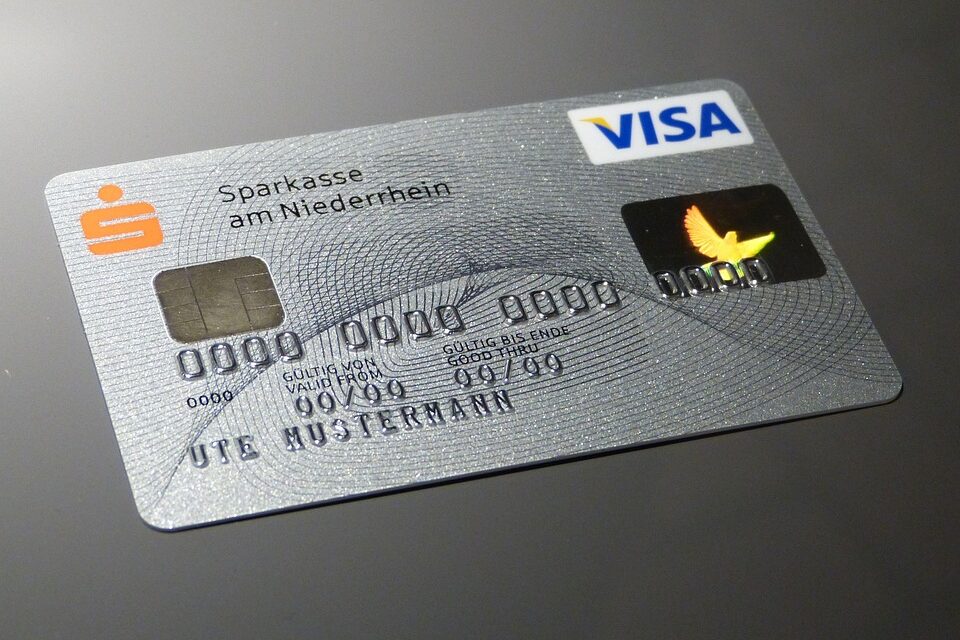
How to Choose the Best Travel Credit Card for Your Trips
Travelling internationally can be exciting, but managing money across different countries can quickly become complicated. Currency conversion fees, ATM charges, card acceptance, exchange rates, annual fees, and unexpected expenses can all affect the real cost of a trip.
A travel credit card can help reduce some of these costs while offering rewards and additional benefits. Depending on the card, travellers may earn points or miles, avoid foreign transaction fees, receive travel-related protections, access airport lounges, receive hotel benefits, or get other rewards on everyday spending.
However, there is no single best travel credit card for everyone.
The right card depends on where you live, where you travel, how often you travel, what you spend money on, whether you carry a balance, and which benefits you will actually use.
This guide explains what to look for when comparing travel credit cards, how rewards work, which fees matter, how to calculate whether an annual fee is worthwhile, and how to use a credit card responsibly while travelling.
Why Travel Credit Cards Matter
A credit card can be more than a payment method when you travel. The right card can potentially reduce certain travel costs and provide additional value through rewards and protections.
Some of the main reasons travellers consider travel credit cards include:
- Reducing or avoiding foreign transaction fees
- Earning points or miles on eligible purchases
- Receiving travel-related statement credits or benefits
- Accessing airport lounges on eligible cards
- Receiving travel insurance or purchase protections
- Getting rental-car coverage on qualifying cards
- Receiving hotel or airline-related benefits
- Having a convenient alternative to carrying large amounts of cash
- Building or maintaining a strong credit history through responsible use
However, rewards should never be the only consideration. A card that earns impressive rewards but charges high fees or encourages you to spend more than you can repay may be a poor financial choice.
What Makes a Good Travel Credit Card?
A good travel credit card should match your actual travel and spending habits.
For one traveller, the most important feature may be zero foreign transaction fees. For another, flexible points that can be transferred to airline or hotel programs may be more valuable. A frequent traveller might benefit from lounge access, while an occasional traveller may prefer a simple card with no annual fee.
When comparing cards, consider these major factors:
- Foreign transaction fees
- Annual fee
- Rewards earning rate
- Reward redemption options
- Welcome offers
- Travel credits
- Travel insurance and protections
- Airport lounge benefits
- Airline and hotel partnerships
- Acceptance at your destinations
- Exchange-rate treatment
- Cash advance fees and interest
- Purchase and fraud protection
- Customer service and emergency assistance
1. Start by Understanding Your Travel Habits
Before comparing individual cards, understand how you actually travel.
Ask yourself:
- How often do I travel internationally?
- Do I mostly travel domestically or abroad?
- Do I usually fly economy or premium cabins?
- Do I stay in hotels, hostels, resorts, or vacation rentals?
- Do I rent cars?
- Do I spend heavily on dining?
- Do I travel with family?
- Do I prefer one airline or hotel group?
- Do I want simple cashback or flexible travel rewards?
- Will I actually use airport lounges?
- Can I pay the entire balance every month?
Your answers can quickly eliminate cards that look attractive on paper but do not fit your lifestyle.
Example: Occasional Traveller
If you take one or two trips a year and have modest travel spending, a premium card with a large annual fee may not make sense.
A no-annual-fee or low-fee card with no foreign transaction fee and straightforward rewards may be more appropriate.
Example: Frequent International Traveller
If you travel internationally several times a year, a card with no foreign transaction fee, flexible rewards, travel protections, and useful airport or hotel benefits may provide significantly more value.
Example: Business Traveller
A frequent business traveller may place greater value on lounge access, travel insurance, flexible points, hotel benefits, and travel-related protections than on a simple cashback rate.
2. Check the Foreign Transaction Fee First
For international travellers, foreign transaction fees deserve particular attention.
A foreign transaction fee is a charge that may apply when you use a card for purchases involving a foreign currency, foreign merchant, or transaction outside your home country, depending on the card’s terms.
Even a relatively small percentage can become noticeable over a long trip or when travelling frequently.
For example, if a card charges a 3% foreign transaction fee and you make the equivalent of $3,000 in eligible foreign purchases, the fee alone could amount to $90.
The exact treatment depends on the card and its terms, but the basic principle is simple:
If you frequently travel internationally, look carefully for a card with no foreign transaction fee.
Also remember that avoiding a foreign transaction fee does not necessarily mean you are receiving the best possible exchange rate. Currency conversion involves the card network and other factors, so compare the overall cost rather than looking at only one fee.
3. Understand the Difference Between Rewards, Miles and Cashback
Travel cards generally reward spending in one of several ways.
Travel Points
Points may be redeemable for flights, hotels, travel bookings, gift cards, statement credits, or transfers to participating loyalty programs.
The advantage is flexibility, particularly when points can be transferred to different airline or hotel programs.
Airline Miles
Some cards are connected to specific airline loyalty programs. These can be valuable if you regularly fly with that airline or its partners.
The disadvantage is that you may have fewer options if your travel patterns change.
Hotel Rewards
Hotel-linked cards can provide hotel points or benefits such as elite status, depending on the card and program.
These can work particularly well for travellers who regularly stay with the same hotel group.
Cashback
Cashback is simpler. Instead of trying to understand airline award charts or hotel redemption values, you receive a monetary benefit based on eligible spending.
Cashback can be particularly attractive for travellers who want to reduce the cost of future trips without dealing with complex loyalty programs.
4. Do Not Judge a Card Only by Its Rewards Rate
A card advertising a high number of points per purchase may appear attractive, but the earning rate is only one part of the calculation.
Suppose Card A earns 3 points per dollar on travel but charges a substantial annual fee, while Card B earns 2 points per dollar with no annual fee.
Card A is not automatically better.
You need to estimate:
- How much you will actually spend in bonus categories
- How much the rewards are realistically worth when redeemed
- How much the annual fee costs
- Whether you will use the card’s additional benefits
- Whether the rewards have restrictions or expiration conditions
A simpler card can sometimes produce better real-world value than a complicated premium card.
5. Calculate Whether the Annual Fee Is Worth Paying
Many premium travel cards charge annual fees. That is not necessarily a problem, but you should calculate whether the benefits justify the cost.
Consider a simple example.
If a card costs $95 per year but you receive $120 of realistic value from rewards and benefits that you would otherwise pay for, the card could provide positive value.
But if a premium card costs several hundred dollars and most of its benefits are services you would never use, the annual fee may not be worthwhile.
Ask These Questions
- Will I use the travel credits?
- Will I actually visit airport lounges?
- Will I use hotel benefits?
- Will I spend enough in bonus categories?
- Are the insurance benefits useful for my travel style?
- Would I pay for these services anyway?
- Can I realistically recover the annual fee?
The key phrase is realistic value. Do not assign a benefit its advertised maximum value if you would never use it.
6. Welcome Bonuses Can Be Valuable — But Do Not Overspend for Them
Many travel credit cards offer a welcome bonus when a new cardholder meets specified spending requirements within a defined period.
These bonuses can provide a significant initial boost to your rewards balance.
But there is an important rule:
Never spend money you cannot afford simply to earn a credit-card bonus.
If you normally spend $1,500 per month and a welcome offer requires $4,000 of spending within a short period, do not manufacture unnecessary purchases just to reach the target.
Interest charges can easily outweigh the value of a welcome bonus if you carry a balance.
7. Compare the APR, Not Just the Rewards
Annual percentage rate, or APR, is one of the most important numbers on a credit card.
If you regularly carry a balance from month to month, interest can quickly outweigh rewards.
This is why travel rewards cards are generally most useful for people who can manage their spending responsibly and pay their statement balance according to the card’s terms.
A 2% or 3% rewards return sounds attractive until interest charges begin accumulating on unpaid balances.
Before applying, understand:
- Purchase APR
- Cash advance APR
- Balance transfer APR
- Introductory APR, if applicable
- When promotional rates end
- Late-payment consequences
- Other applicable fees
8. Be Very Careful With Cash Advances
Using a credit card to withdraw cash from an ATM is generally different from making a normal purchase.
Cash advances can involve a separate fee and a higher interest rate, and interest may begin accruing immediately rather than after the normal purchase grace period.
The Consumer Financial Protection Bureau specifically warns that credit-card cash advances can be expensive because they may involve additional fees and interest.
For this reason, travellers should generally avoid using a credit card for ATM cash withdrawals unless they understand the exact costs and have no better alternative.
9. Check Travel Insurance and Protection Benefits
Travel insurance can be one of the more valuable benefits offered by some travel cards, but coverage varies considerably.
Potential benefits may include:
- Trip cancellation protection
- Trip interruption protection
- Trip delay coverage
- Baggage delay or loss coverage
- Rental-car coverage
- Travel accident protection
- Emergency assistance
- Emergency evacuation benefits
Do not assume that a card automatically covers every travel problem.
Read the actual benefit terms and pay attention to requirements such as:
- Whether the trip must be paid for with the card
- Who is covered
- Maximum reimbursement amounts
- Covered reasons for cancellation
- Excluded circumstances
- Required documentation
- Whether the coverage is primary or secondary
For expensive or complex international travel, a dedicated travel insurance policy may still be appropriate even when your credit card provides some protection.
10. Airport Lounge Access: Valuable or Overrated?
Airport lounge access is one of the most popular premium-card benefits.
Lounges may provide a quieter place to wait, seating, refreshments, Wi-Fi, work areas, and other facilities.
But lounge access only has significant financial value if you actually use it.
If you usually arrive at the airport shortly before boarding, travel through airports without eligible lounges, or rarely have long connections, paying a large annual fee primarily for lounge access may not make sense.
Frequent travellers with long layovers may find it much more useful.
11. Consider the Card Network and International Acceptance
International acceptance matters.
Visa and Mastercard have broad international acceptance, while American Express and other networks may have more variable acceptance depending on the country and merchant.
This does not mean one network is universally better. It means travellers should understand the places they are visiting and carry an appropriate backup payment method.
A practical approach is to carry:
- One primary credit card
- A second card from a different network where practical
- A debit or ATM card
- A small amount of emergency cash
This provides alternatives if one card is declined, blocked, lost, or temporarily unavailable.
12. Always Carry a Backup Payment Method
Even the best credit card can fail.
A card may be declined because of a fraud alert, offline terminal, merchant limitation, network problem, incorrect PIN, damaged card, or security block.
For international travel, avoid putting your entire financial plan on one card.
Keep a backup card separately from your primary card. If your wallet is lost or stolen, having another payment method stored securely can make a major difference.
13. Understand Dynamic Currency Conversion
When paying abroad, a merchant or ATM may sometimes offer to convert the transaction into your home currency rather than charging you in the local currency.
This is known as dynamic currency conversion.
Although seeing the amount in your familiar currency may appear convenient, the exchange rate and additional markup can make the transaction more expensive.
In many situations, it is better to understand the card’s currency-conversion terms and consider paying in the local currency rather than automatically accepting a merchant’s conversion.
Always review the screen carefully before confirming an ATM or card transaction.
14. Compare Rewards Redemption, Not Just Rewards Earning
Two cards can offer the same number of points but provide very different real-world value.
For example, one point might be worth more when transferred to a particular airline program, while another card may offer a simpler but less valuable statement-credit redemption.
Before choosing a card, investigate:
- How points can be redeemed
- Whether points can be transferred to airline programs
- Whether hotel transfers are available
- Whether travel bookings can be made directly with points
- Whether cashback is available
- Whether redemption values vary
- Whether blackout dates or restrictions apply
- Whether rewards expire or can be forfeited
The best rewards program is the one you can actually use efficiently.
15. Flexible Points Can Be Valuable for Frequent Travellers
Some travel cards operate within flexible rewards ecosystems that allow points to be used in several ways.
This can be useful when your travel plans change.
Instead of being tied to one airline, flexible points may allow you to transfer rewards to several airline or hotel loyalty programs, depending on the issuer and applicable terms.
This flexibility can be especially useful for international travellers who fly different airlines depending on route, price, schedule, or destination.
However, loyalty programs and transfer relationships can change. Always check the current terms before transferring points.
16. Examples of Travel Cards — and Why They Should Not Be Treated as a Permanent Ranking
Well-known travel cards such as the Chase Sapphire Preferred, Capital One Venture, and American Express Gold Card are examples of products that can be considered when researching travel rewards.
However, their fees, earning structures, benefits, welcome offers, transfer relationships, and redemption options can change.
For example, the Chase Sapphire Preferred currently has a $95 annual fee and offers no foreign transaction fees, while its current rewards structure includes elevated earning on travel and dining categories.
The Capital One Venture currently has a $95 annual fee, earns 2 miles per dollar on everyday purchases, offers 5 miles per dollar on certain bookings through Capital One Travel, and has no foreign transaction fees.
The U.S. American Express Gold Card currently carries a $325 annual fee and provides rewards across dining and selected travel spending, including points on eligible flights and prepaid hotels booked through the issuer’s travel channels. It also has no foreign transaction fees.
These examples demonstrate an important point: the best card depends on how you spend and how you travel. Product terms can change, so check the issuer’s official terms before applying.
17. Travel Credit Cards Are Not Available Everywhere
Many popular travel credit cards discussed online are issued in specific countries and may require local residency, credit history, income documentation, or other eligibility requirements.
A card that is excellent for a traveller in the United States may not be available to someone living in the United Kingdom, Europe, Asia, Africa, or another region.
When researching cards, start with products available in your country of residence.
Look at local:
- Credit-card issuers
- Airline loyalty programs
- Hotel loyalty programs
- Foreign transaction policies
- Travel insurance benefits
- Currency conversion costs
- ATM fees
- Consumer protection rules
This makes the comparison much more relevant than simply copying recommendations from an overseas travel blog.
18. Travel Credit Card vs Debit Card vs Prepaid Travel Card
A credit card is not necessarily the only or best way to carry money abroad.
Credit Card
Advantages: Convenient payments, potential rewards, fraud protections, and useful travel benefits.
Disadvantages: Interest charges if balances are carried, possible fees, and acceptance limitations depending on the network and merchant.
Debit Card
Advantages: Direct access to your bank balance and useful for ATM withdrawals.
Disadvantages: Potential foreign ATM, currency conversion, or bank fees, depending on the account.
Prepaid Travel Card
Advantages: Can help with budgeting and may allow you to hold selected currencies before travelling.
Disadvantages: Fees, exchange-rate differences, reload restrictions, and varying acceptance depending on the product.
For many travellers, a combination is more practical than relying on only one method.
19. How to Use a Travel Credit Card Responsibly
A rewards card only saves money when it is managed responsibly.
Pay the Balance on Time
Late payments can result in fees, interest, and potentially negative effects on your credit history.
Prefer Paying the Full Statement Balance
If you can afford to do so, paying the statement balance in full can help you avoid interest on purchases under the card’s applicable terms.
Do Not Spend More to Earn More Points
A reward is not a saving if you would not have made the purchase otherwise.
Monitor Your Account While Travelling
Check transactions regularly so you can identify unauthorized activity quickly.
Notify the Issuer When Necessary
Some issuers use automated fraud systems that may flag unusual international activity. Follow your issuer’s travel and security procedures.
20. A Simple Formula for Comparing Travel Credit Cards
You do not need complicated mathematics to compare cards.
Start with:
Annual Rewards Value + Benefits You Will Actually Use − Annual Fee − Travel-Related Fees = Approximate Annual Value
For example, imagine a card provides:
- $150 of realistic annual rewards
- $100 of benefits you would actually use
- A $95 annual fee
- $20 of other avoidable costs
Your approximate net value would be:
$150 + $100 − $95 − $20 = $135
This is only a simplified calculation. Actual reward values depend on how points are redeemed and the card’s terms, but the approach helps prevent the common mistake of focusing only on the headline benefits.
21. Common Mistakes Travellers Make With Credit Cards
Choosing a Card Because of a Big Welcome Bonus
A large bonus can be attractive, but it should not determine your decision if the long-term card does not fit your spending.
Ignoring the Annual Fee
A card with excellent benefits can still be poor value if you do not use them.
Forgetting About Foreign Transaction Fees
A card that works perfectly at home may become expensive abroad if it charges foreign transaction fees.
Using a Credit Card for Cash Advances
Cash advances can be expensive because of fees and interest.
Carrying Only One Card
Always consider having a backup payment method when travelling internationally.
Assuming Every Card Includes Travel Insurance
Travel protection varies by issuer and product. Read the actual benefit terms.
Using Rewards Without Understanding Their Value
Points are not automatically equal to cash. Redemption value can vary significantly.
Spending More Just to Earn Rewards
Rewards should support your budget, not encourage unnecessary spending.
22. How to Prepare Your Credit Cards Before an International Trip
A little preparation can prevent significant problems abroad.
- Check that your card has not expired.
- Confirm your credit limit and available balance.
- Check foreign transaction fees.
- Understand your ATM and cash-advance terms.
- Make sure your contact information is up to date.
- Know how to contact the issuer internationally.
- Install the issuer’s mobile application if useful.
- Enable transaction notifications.
- Set up two-factor authentication.
- Carry a backup card.
- Keep emergency contact information somewhere secure.
- Understand how your card handles foreign currencies.
Also remember to keep your physical cards secure while travelling. Digital wallets can provide another payment option on compatible devices, but they should complement rather than replace your backup plan.
23. What If Your Credit Card Is Lost or Stolen Abroad?
Act quickly.
- Lock or freeze the card through your banking application if that option is available.
- Contact the card issuer using an official number or application.
- Report unauthorized transactions.
- Request a replacement if necessary.
- Use your backup payment method.
- If your wallet or documents were also stolen, contact the relevant local authorities and your travel insurer where appropriate.
Do not wait until you return home to report suspicious transactions.
24. How to Choose the Best Card for Different Types of Travellers
For Budget Travellers
Focus on low or no annual fees, no foreign transaction fees, simple rewards, and low overall costs.
For Frequent International Travellers
Prioritize foreign transaction fees, rewards flexibility, travel protections, international acceptance, and useful travel benefits.
For Luxury Travellers
Premium cards may offer lounge access, hotel benefits, travel credits, concierge services, and other perks. Calculate whether you will actually use them.
For Families
Look for benefits that work well for multiple travellers, such as travel protections, flexible rewards, and practical spending categories.
For Business Travellers
Consider cards that reward business-related expenses and provide travel protections, expense management features, and flexible rewards where appropriate.
For Occasional Travellers
A simple low-fee or no-fee card may provide better value than a premium card with benefits you rarely use.
25. The Best Travel Credit Card Is the One That Fits Your Real Life
There is no universal winner in the travel credit card market.
The right card for one traveller can be completely wrong for another.
A frequent international traveller may value flexible points and travel protections. A backpacker may care more about avoiding fees. A family may prioritize insurance and practical benefits. A traveller who rarely flies may simply prefer cashback.
Instead of asking, “Which travel credit card is the best?”, ask:
“Which card gives me the most useful value for the way I actually travel and spend?”
That question leads to a much better decision.
FAQs About Travel Credit Cards
1. What is the best travel credit card?
There is no single best travel credit card for everyone. The right choice depends on your country, travel frequency, spending patterns, preferred rewards, annual-fee tolerance, and the benefits you will actually use.
2. Is a travel credit card worth it?
It can be worthwhile if the rewards and benefits exceed the card’s fees and you use the card responsibly. Frequent international travellers may particularly benefit from cards with no foreign transaction fees and useful travel protections.
3. Should I choose points or cashback?
Choose points if you enjoy maximizing travel rewards and are comfortable comparing redemption options. Cashback may be better if you want simplicity and predictable value.
4. Are travel credit cards good for international travel?
They can be. Look for no foreign transaction fees, broad acceptance, useful travel protections, and rewards that match your spending. Always check the card’s current terms before travelling.
5. Should I carry two credit cards while travelling?
For international trips, carrying a backup card is generally a sensible precaution. Consider keeping the backup separately from your primary card.
6. Can I withdraw cash using a travel credit card?
Usually yes, if the card permits cash advances, but it can be expensive. Cash advances may involve fees and interest that begins accruing immediately.
7. Do travel credit cards have foreign transaction fees?
Some do and some do not. If you travel internationally, check the card’s pricing and terms before applying.
8. Does a travel credit card automatically include travel insurance?
No. Travel insurance and protection benefits vary considerably between cards. Check the actual benefit guide, eligibility requirements, exclusions, and coverage limits.
9. Is an annual-fee travel card worth it?
It can be if the rewards and benefits you genuinely use are worth more than the annual fee. If you rarely travel, a no-fee option may be more appropriate.
10. Should I use my credit card or cash abroad?
A combination is often practical. Cards are convenient for many purchases, while some cash can be useful for small merchants, transportation, emergencies, or places where cards are not accepted.
11. Can I use a travel credit card for everyday purchases?
Yes. Many travel cards reward eligible everyday spending, and using the card for normal purchases can help accumulate rewards. However, never increase your spending simply to earn points.
12. What should I check before applying for a travel credit card?
Review the annual fee, APR, foreign transaction fee, rewards structure, redemption options, welcome offer requirements, travel protections, eligibility requirements, and other applicable fees.
Final Thoughts
A travel credit card can be a useful part of your travel-finance strategy, but choosing one should be based on more than a flashy welcome bonus or a high rewards rate.
Start with your travel habits. Then compare foreign transaction fees, annual fees, rewards, redemption flexibility, insurance, travel benefits, acceptance, and the cost of carrying a balance.
Most importantly, remember that rewards only create value when you manage the card responsibly. Paying interest or unnecessary fees can quickly eliminate the benefits you worked to earn.
Before applying for any card, check the issuer’s current terms because annual fees, rewards structures, benefits, eligibility requirements, and promotional offers can change.
For travellers who plan carefully, use credit responsibly, and choose benefits that match their real needs, the right travel credit card can become a useful tool for making international trips more convenient and potentially more rewarding.












Subscribe To Our Newsletter
Join our mailing list to receive the latest news and updates from our team.
You have Successfully Subscribed!